 SeaAj
Best months
July–November
Where
- Open sea
Best time
- Dawn
- Daytime
Usual size
50–80 cm
General guidance for the Mediterranean and the nearby Atlantic; local seasons can differ.
How to catch it
Methods
- Spinning (lures)
- Trolling
- Jigging
Baits
- Live fish
Lures
- Metal jigs
- Minnows / plugs
- Surface lures
The angler's tip
Watch for birds and boiling water: cast a fast metal jig into the shoal and wind quickly. A hard, fast fighter.
Easily confused with
Legal minimum size
We have no verified rule for your country yet. Check your local fisheries authority before keeping any fish.
About this fish
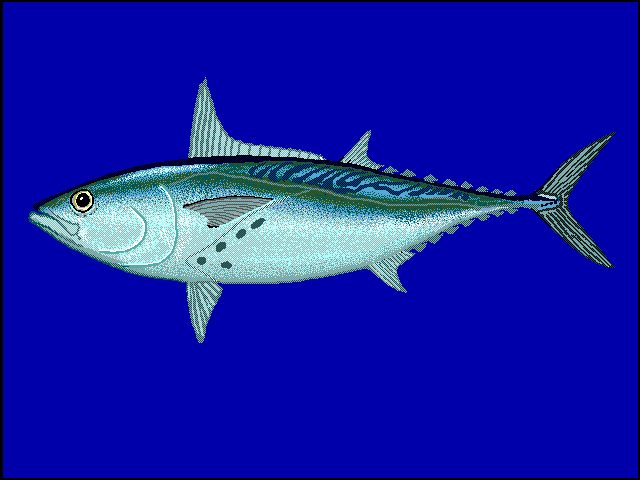
The little tunny, also known as the little tuna, false albacore, or erroneously as the blue bonito, is a species of tuna in the family Scombridae. It can be found in the Atlantic Ocean and the Mediterranean and Black seas; in the western Atlantic, it ranges from Brazil to the New England states. The little tunny is a pelagic fish that can be found regularly in both offshore and inshore waters, and it is classified as a highly migratory species. The little tunny is best identified by the "worm-like" markings on its back and the dark spots appearing between its pectoral and ventral fins.
Frequently asked questions
When is the best time to catch little tunny?
The best months are July–November. Best time of the day: Dawn, Daytime.
What bait or lure works for little tunny?
Live fish · Metal jigs, Minnows / plugs, Surface lures · Spinning (lures), Trolling, Jigging.
Related species
These are estimates, not guarantees. Always look at the sea yourself before going out, do not go alone and wear a life jacket.