 SeaAj

Best months
June–October
Where
- Open sea
- Deep water
- Rocks
Best time
- Dawn
- Dusk
Usual size
60–150 cm
General guidance for the Mediterranean and the nearby Atlantic; local seasons can differ.
How to catch it
Methods
- Jigging
- Live bait
- Trolling
Baits
- Live fish
- Squid
Lures
- Metal jigs
- Surface lures
The angler's tip
Very powerful: vertical jigging or live bait over wrecks and drop-offs, with heavy tackle; it dives for cover at once.
Easily confused with
Legal minimum size
We have no verified rule for your country yet. Check your local fisheries authority before keeping any fish.
About this fish
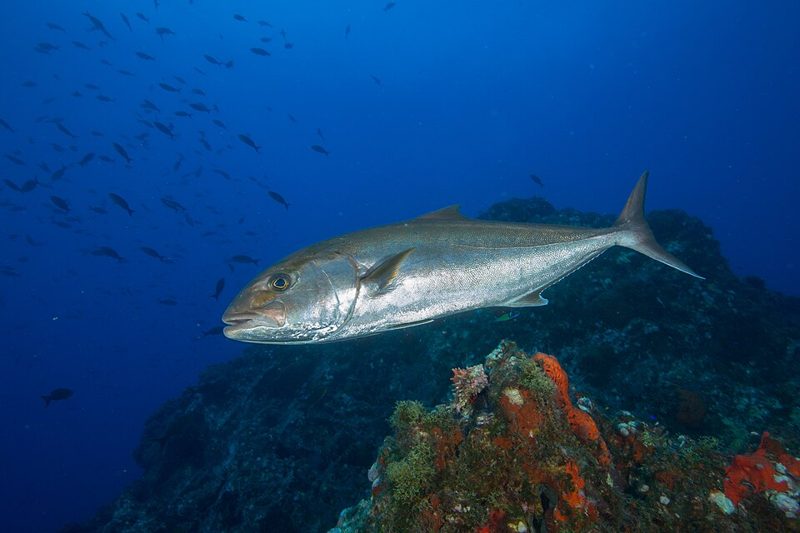
The greater amberjack, also known as the allied kingfish, great amberfish, greater yellowtail, jenny lind, sea donkey, purplish amberjack, reef donkey, rock salmon, sailors choice, yellowtail, and yellow trevally, is a species of predatory ray-finned fish in the family Carangidae, the jacks and pompanos. It is found in temperate, subtropical, and tropical seas around the world. It is a popular quarry species for recreational fisheries and is important in commercial fisheries. It is the largest species in the family Carangidae.
Frequently asked questions
When is the best time to catch Greater amberjack?
The best months are June–October. Best time of the day: Dawn, Dusk.
What bait or lure works for Greater amberjack?
Live fish, Squid · Metal jigs, Surface lures · Jigging, Live bait, Trolling.
Related species
These are estimates, not guarantees. Always look at the sea yourself before going out, do not go alone and wear a life jacket.