 SeaAj

Best months
May–October
Where
- Sandy beaches
Best time
- Daytime
- Night
Usual size
20–35 cm
General guidance for the Mediterranean and the nearby Atlantic; local seasons can differ.
⚠️ Venomous spines
Never hold it bare-handed: use a towel or fish grip. If stung, soak the wound in water as hot as you can bear (without scalding) and see a doctor.
How to catch it
Methods
- Surfcasting
- Bottom fishing
Baits
- Sea worms
- Shrimp
The angler's tip
Not a target but a common catch on sandy beaches — and one of the most painful stings in the sea. Never touch it bare-handed; if stung, soak in water as hot as you can bear and see a doctor.
Legal minimum size
We have no verified rule for your country yet. Check your local fisheries authority before keeping any fish.
About this fish
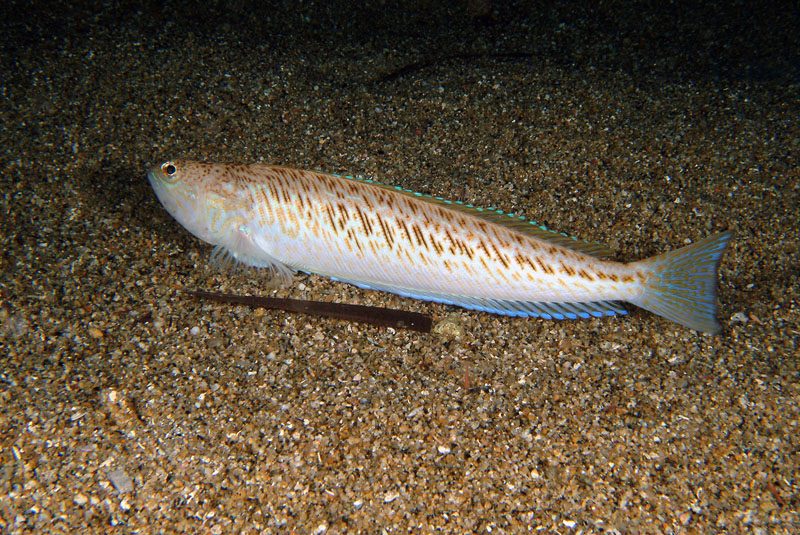
The greater weever is a species of marine ray-finned fish in the family Trachinidae. It is a benthic fish widely distributed along the eastern Atlantic coastline, extending to the Mediterranean, Aegean and Black Seas. The greater weever is mostly and notoriously known for its venomous spines, which can inflict serious injuries on humans through accidental stinging. Because of this, the greater weever is classified as one of the most venomous fishes in the Mediterranean.
Frequently asked questions
When is the best time to catch greater weever?
The best months are May–October. Best time of the day: Daytime, Night.
What bait or lure works for greater weever?
Sea worms, Shrimp · Surfcasting, Bottom fishing.
These are estimates, not guarantees. Always look at the sea yourself before going out, do not go alone and wear a life jacket.